
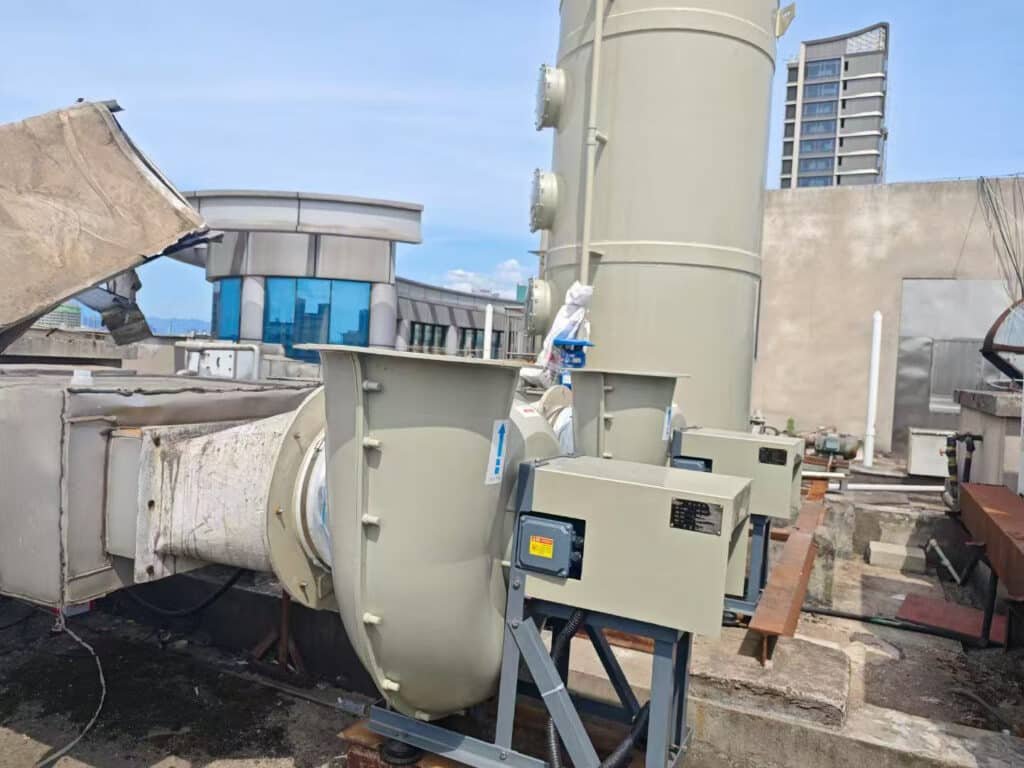
Permanent magnet blowers, specifically Permanent Magnet Synchronous Motor (PMSM) driven high-speed centrifugal blowers, represent a significant technological advancement over traditional blower systems (such as induction motor-driven multistage blowers or single-stage blowers with gearboxes). Their advantages span energy efficiency, reliability, control precision, and total cost of ownership.
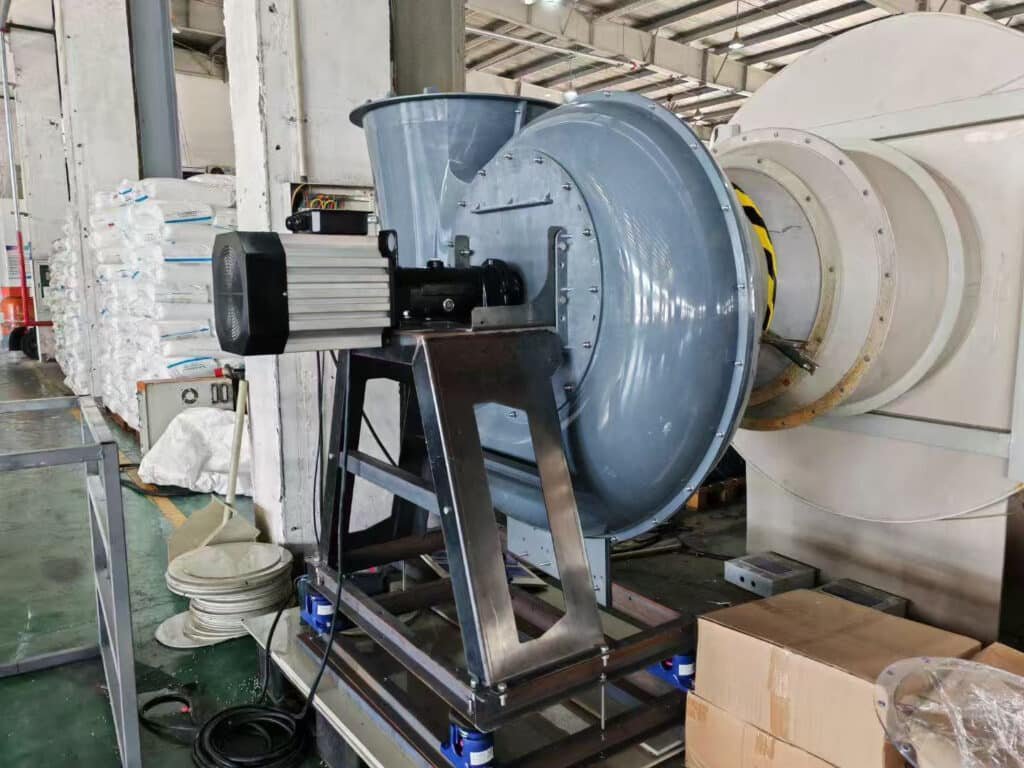
1. Exceptional Energy Efficiency & Direct Cost Savings
- Higher System Efficiency: Integrates a high-speed PMSM directly coupled to an impeller, eliminating gearbox losses and coupling losses. Overall system efficiency often reaches 92-96%, compared to 60-75% for traditional geared blowers.
- Wide High-Efficiency Range: Maintains high efficiency across a broad operating range (typically 40-100% flow), whereas induction motors see efficiency drop sharply at partial loads.
- Direct Energy Savings: Typically reduces energy consumption by 25-40% in variable air flow applications (e.g., wastewater aeration, pneumatic conveying).
- High Power Factor: Near-unity power factor (0.95-1.0) reduces reactive power demand and minimizes power supply capacity requirements.
2. Permanent magnet fans offer superior reliability and lower maintenance costs.
- Simplified Mechanical Design:
- No gearbox → eliminates gear wear, oil leaks, and lubrication maintenance.
- Direct drive → no couplings, alignment issues, or belt drives.
- Fewer rotating parts → lower vibration and higher mechanical integrity.
- Advanced Bearing Technology: Often utilizes air foil bearings or magnetic bearings, which are contact-free, oil-free, and have virtually unlimited lifespan.
- Lower Operating Temperature: PM motors run cooler due to lower losses, extending insulation life and reducing thermal stress on components.
- High MTBF (Mean Time Between Failures): Typically exceeds 100,000 hours of continuous operation.
3. Precise & Flexible Process Control
- Integrated Variable Frequency Drive (VFD): Enables precise speed control from 20,000 to 60,000+ RPM without mechanical speed changers.
- Rapid Dynamic Response: Can adjust airflow in seconds to match process demand, improving process stability (e.g., dissolved oxygen control in aeration).
- Wide Turndown Ratio: Can operate efficiently at very low flows (as low as 20% of design flow) without surge or stall issues common in traditional blowers.
- Smart Control Integration: Built-in PLC and sensors allow for direct integration with process control systems (e.g., SCADA, DCS) for automated optimization.
4. Space Saving & Easy Installation
- Compact Footprint: Typically 40-60% smaller than traditional blower packages (due to elimination of gearbox, large motor, and coupling systems).
- Modular & Skid-Mounted Design: Often supplied as a complete plug-and-play unit, reducing installation time and complexity.
- Lightweight: Reduced weight simplifies structural support requirements.
5. Environmental and operational benefits of permanent magnet fans
- Low Noise Level: Typically operates below 80 dB(A) due to absence of gear mesh noise and lower vibration.
- Oil-Free Air Delivery: No risk of oil contamination in the process air (critical for food, pharmaceutical, and wastewater applications).
- Reduced Heat Rejection: Lower losses mean less waste heat, reducing HVAC load in the blower room.
- Lower Carbon Footprint: Direct energy savings translate to reduced CO₂ emissions.
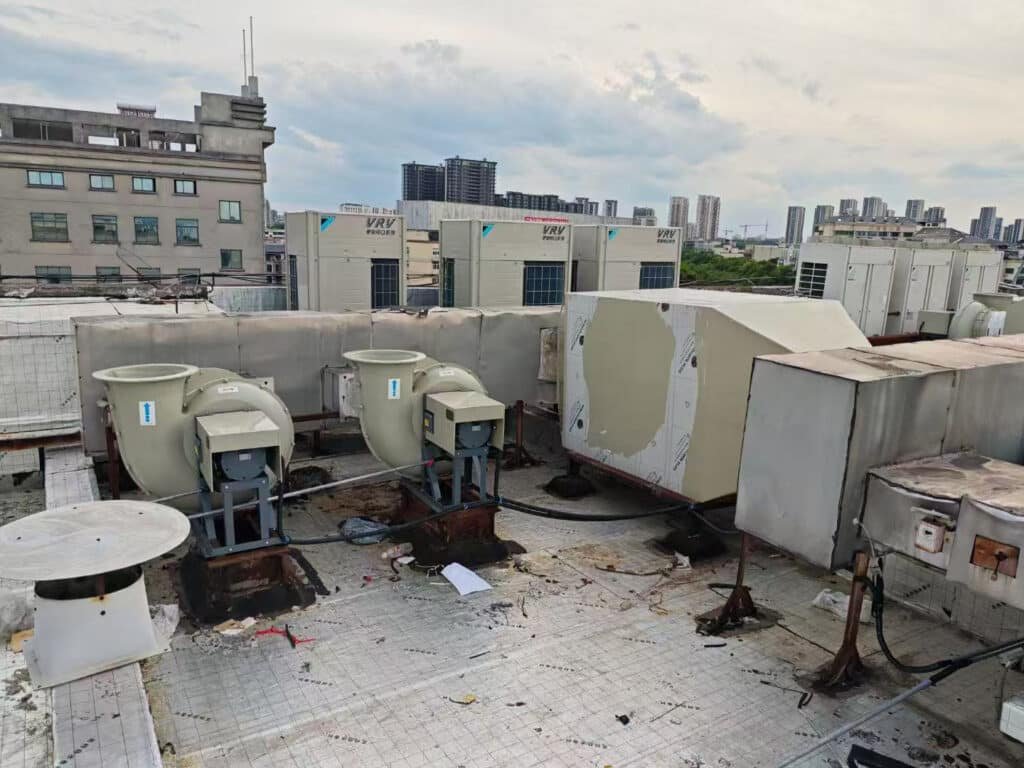
6. Economic advantages of industrial permanent magnet fans throughout their life cycle
| Cost Factor | Traditional Blower (Gear-based) | Permanent Magnet Blower | Advantage |
|---|---|---|---|
| Initial Cost | Lower | Higher (premium) | PM pays back via savings |
| Energy Cost | High (lower efficiency) | 25-40% lower | Major saving |
| Maintenance Cost | High (gears, oil, bearings) | 60-80% lower | Minimal scheduled maintenance |
| Downtime Cost | Higher (more frequent repairs) | Very low | Increased production uptime |
| Total Cost of Ownership (5-year) | Higher | 20-35% lower | Clear long-term savings |
Typical Payback Period: 1-3 years in continuous operation applications.
7. Main application areas of high-efficiency permanent magnet fans
- Wastewater Treatment Aeration: The largest application, where energy savings of 30-50% are commonly achieved.
- Industrial Pneumatic Conveying: Consistent pressure control improves reliability.
- Aquaculture & Fish Farming: Precise oxygen control improves yield.
- Food & Beverage Processing: Oil-free air is critical.
- Cement & Power Plant Fluidizing Air: Handles dusty conditions well.
8. Comparison with Traditional Blower Technologies
| Feature | Multistage Centrifugal (Gear-Driven) | Single-Stage High-Speed (Induction Motor + Gearbox) | Permanent Magnet High-Speed Blower |
|---|---|---|---|
| Efficiency | 60-70% | 70-80% | 92-96% |
| Speed Control | Limited (inlet guide vanes, throttle) | Good (VFD + gearbox) | Excellent (direct VFD control) |
| Maintenance Interval | 8,000-16,000 hours | 8,000-16,000 hours | 40,000+ hours |
| Noise Level | High (85-95 dB) | Medium-High (80-90 dB) | Low (75-85 dB) |
| Footprint | Large | Medium | Compact |
| Oil-Free Operation | Usually not | Usually not | Yes (standard) |