
Permanent Magnet Synchronous Motor | XICHENG
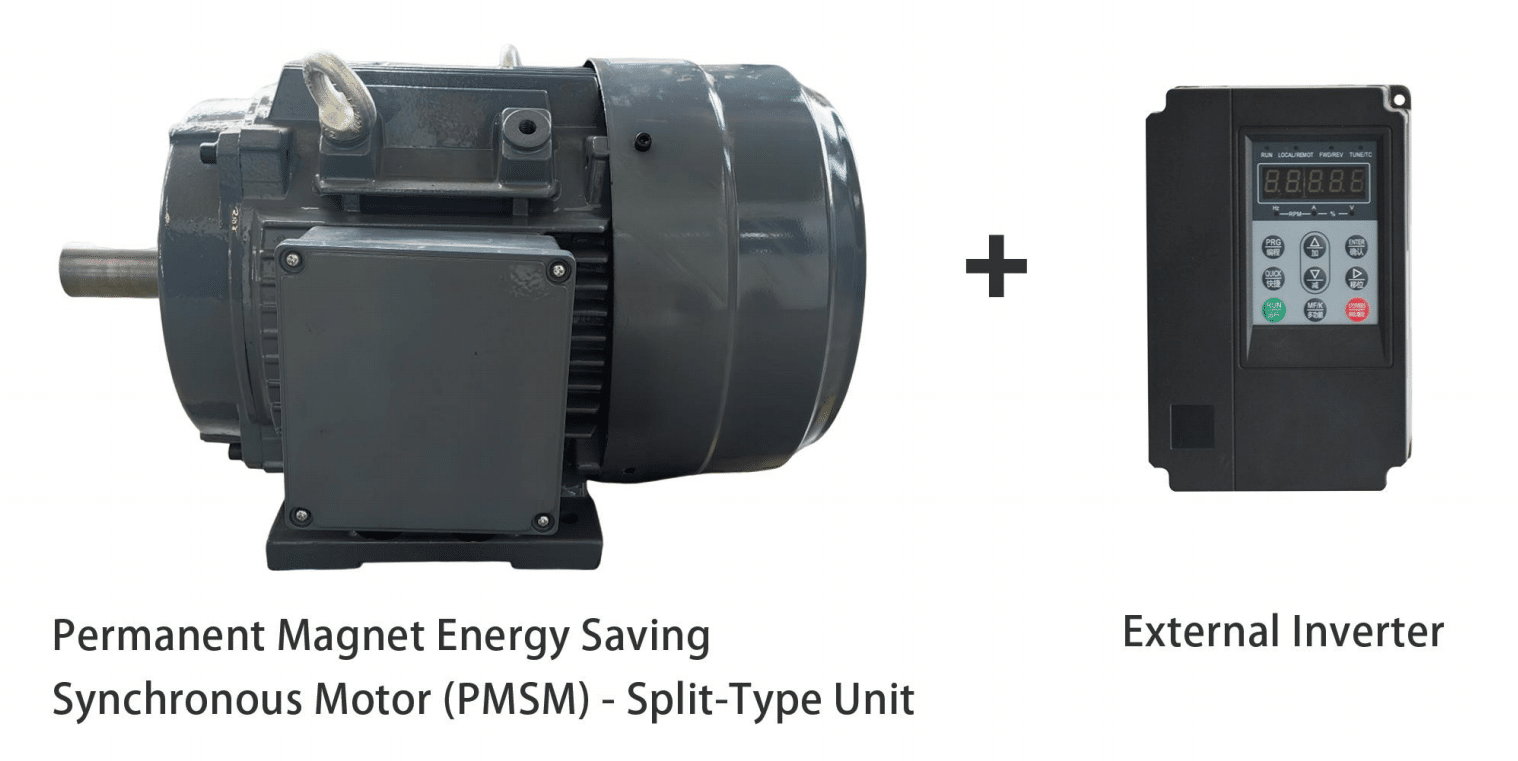
Permanent magnet synchronous motor + split-type unit refers to a configuration where the PMSM motor body and the controller/driver are designed separately and connected by cables to form a complete drive system. Unlike an “integrated unit” (where the motor and controller are integrated), the split-type unit uses independent component designs; the motor body, driver, encoder, etc., are independent modules that work together via cable connections.
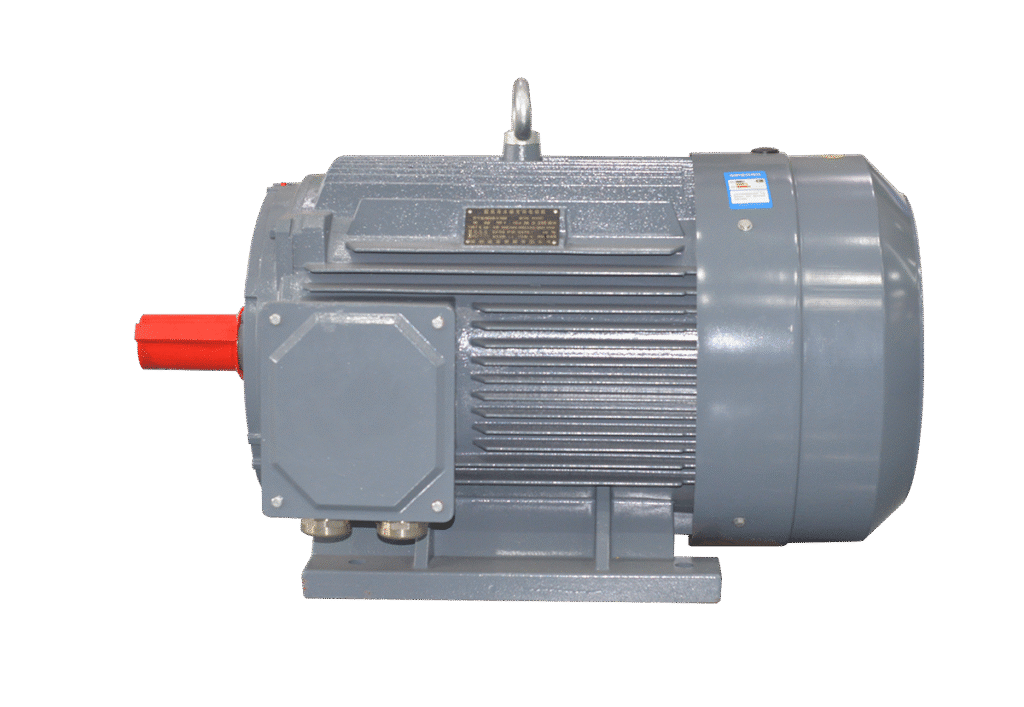
Specifications
| Category | Electric Motors, Permanent magnet motor |
|---|---|
| Frame size mm | H 200 – H 280 |
| KW | 22 KW – up to 90KW |
Voltage | 380V |
| Noise | 66-74 dB(A) |
| Rated speed | 1500-3000 (rpm) |
| HZ | 100-200 Hz / Built-in frequency converter drive |
| Applications | Blowers, water pumps, compressors, transmission devices, etc. |
| Certification | GB30253-2013″Energy Efficiency Limits and Energy Efficiency Grades for Permanent Magnet Synchronous Motors” – Level 1 |
Permanent Magnet Synchronous Motor | XICHENG
Core Working Principles of Permanent Magnet Synchronous Motors
- Excitation Mechanism: The rotor permanent magnets provide a constant air gap magnetic field, eliminating the need for excitation current and completely eliminating the excitation losses (copper loss/iron loss) of traditional induction motors;
- Synchronous Operation: When three-phase AC power is applied to the stator, a rotating magnetic field is generated, whose rotational speed is exactly the same as the rotational speed of the rotor permanent magnet field (zero slip), resulting in direct and efficient torque transmission;
- Control Logic: Requires a dedicated frequency converter, using field-oriented control (FOC) or direct torque control (DTC) to achieve precise speed and torque control, adapting to a wide range of operating conditions.
Core Features and Advantages (Quantified + Industrial Value)
Extremely High Efficiency and Energy Saving:
- Overall efficiency reaches IE5 levels (≥95%), 5%-10% higher than traditional induction motors, and efficiency remains stable above 85% under light load/variable load conditions (induction motors only 60%-70%);
- Power factor ≥95, eliminating the need for additional reactive power compensation devices, reducing grid load and electricity costs.
High Power Density:
- Power density reaches 2-4kW/kg (1.5-2 times that of induction motors), reducing volume by 30%-40% and weight by 20%-30% at the same power, meeting the needs of equipment miniaturization and lightweighting.
Precise Control Performance:
- Speed control accuracy ±1%, response time <1ms, supports 0-3000rpm + wide range stepless speed regulation, smooth operation at low speeds (no jitter);
- High starting torque (1.5-2 times the rated current), no impact during frequent starts and stops, suitable for precision machining and automated linkage scenarios.
High Reliability and Low Maintenance:
- The rotor has no slip rings, brushes, or other wear-prone parts, the structure is simple, the failure rate is more than 30% lower than that of induction motors, and the service life is 8-15 years;
- Less heat generation (no excitation loss), low heat dissipation pressure, maintenance only requires routine inspection, without the need for regular replacement of excitation components.
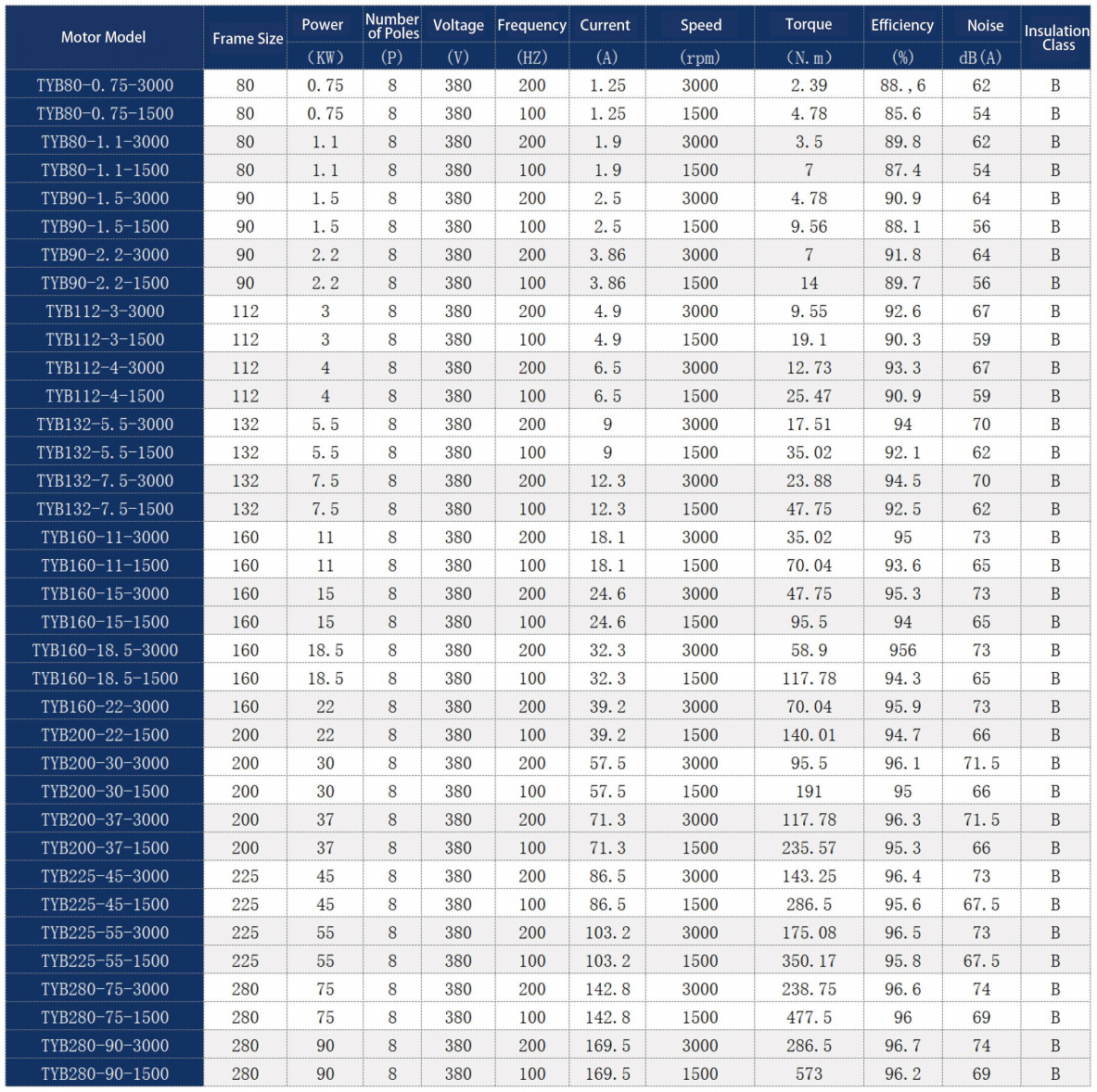
Permanent Magnet Synchronous Motor - Split Machine Parameters
Contact us